How IoT & OT Vulnerabilities Can Shut Down Critical Infrastructure: The Enterprise ICS Security Guide

🚨 The Silent Cyber Threat No One Is Talking About: How IoT & OT Vulnerabilities Can Shut Down Entire Cities Overnight
While most companies focus on protecting data, a far more dangerous threat is emerging—one that targets the physical world itself. IoT and OT systems now control everything from hospitals and factories to energy grids, and attackers are exploiting them faster than organizations can defend.
⚠️ Why IoT & OT Security Is Exploding Right Now
The rapid expansion of Internet of Things (IoT) devices and Operational Technology (OT) systems has created one of the largest and most dangerous attack surfaces in modern cybersecurity. Unlike traditional IT environments that focus on protecting data, OT environments control physical processes such as manufacturing, transportation, healthcare systems, and utilities. This shift means that cyberattacks are no longer limited to stolen information—they can now disrupt real-world operations, damage infrastructure, and even endanger human lives.
Billions of devices are being connected to enterprise networks every year, many of which were never designed with security in mind. These devices often operate using outdated firmware, lack proper authentication controls, and are rarely monitored by security teams. As a result, attackers are increasingly targeting IoT and OT environments as a primary entry point into organizations.
📺 Insert YouTube Video: “How Hackers Take Over Smart Infrastructure”
🔓 The Hidden Vulnerabilities Most Companies Ignore
One of the biggest challenges in IoT and OT security is visibility. Many organizations do not have a complete inventory of the devices connected to their networks. Shadow IoT devices—such as smart cameras, sensors, and unauthorized endpoints—often operate unnoticed, creating blind spots that attackers can exploit. Without full visibility, security teams cannot effectively monitor or defend these environments.
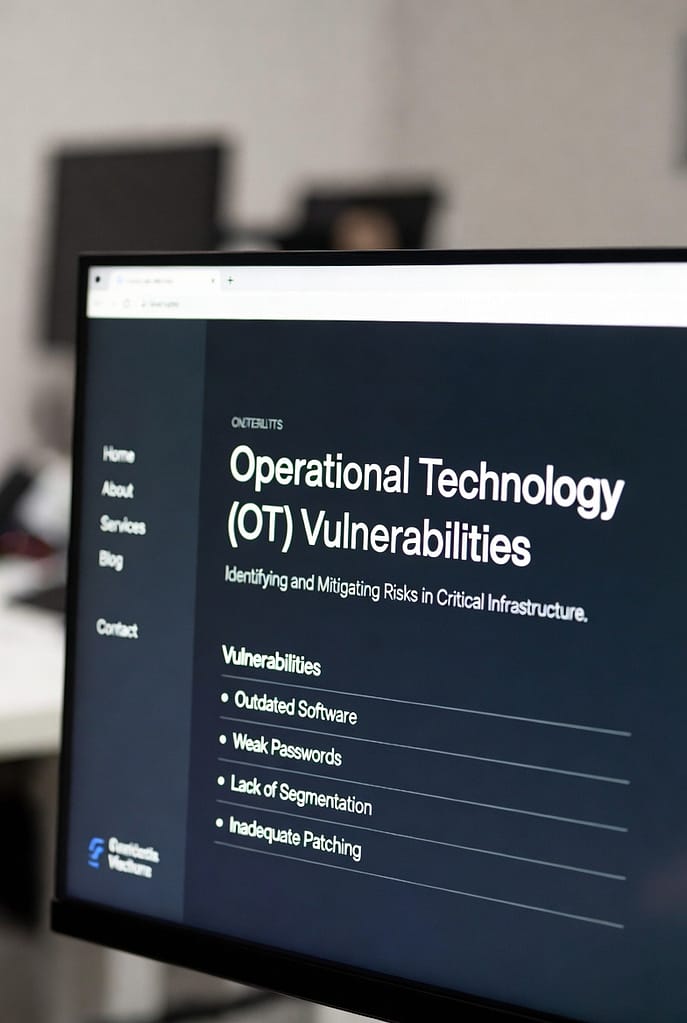
Another major issue is the prevalence of legacy systems. OT devices are designed to last for decades, which means they often run outdated software that cannot be easily patched. In many cases, applying security updates could disrupt operations, leading organizations to delay or avoid patching altogether. This creates long-term exposure to known vulnerabilities that attackers can easily exploit.
Weak authentication and default credentials further compound the problem. Many IoT devices are deployed with factory-set passwords that are rarely changed, making them easy targets for automated attacks. Insecure communication protocols and lack of encryption also allow attackers to intercept and manipulate data as it flows between devices and systems.
💥 Real-World Consequences: Beyond Data Breaches
The impact of IoT and OT attacks extends far beyond traditional data breaches. When industrial systems are compromised, the consequences can be immediate and severe. Manufacturing lines can be shut down, causing millions of dollars in lost productivity. Healthcare systems can be disrupted, putting patient safety at risk. Critical infrastructure such as water treatment facilities and power grids can be manipulated, leading to widespread outages.
One of the most alarming aspects of these attacks is their ability to remain undetected for long periods. Unlike IT systems, where anomalies are often quickly identified, OT environments may lack real-time monitoring and advanced threat detection capabilities. This allows attackers to operate silently, gathering intelligence and positioning themselves for maximum impact.
📈 Why Attackers Are Shifting to IoT & OT
Cybercriminals and nation-state actors are increasingly targeting IoT and OT systems because they offer high-impact results with relatively low resistance. While enterprise IT environments have matured with advanced security controls, IoT and OT systems often lag behind. This imbalance creates an attractive opportunity for attackers seeking to maximize disruption and financial gain.
The convergence of IT and OT networks has also expanded the attack surface. Once attackers gain access to a corporate network, they can move laterally into OT systems, bypassing traditional defenses. This interconnected environment makes it easier for attackers to escalate privileges and execute sophisticated attacks.
🧠 Gartner-Style Strategic Insights
- Visibility is critical: Organizations must identify and monitor all connected devices.
- Traditional security is not enough: OT environments require specialized, non-intrusive solutions.
- Risk-based prioritization is key: Not all vulnerabilities are equal—focus on those with operational impact.
- Segmentation reduces exposure: Isolating systems limits lateral movement.
- Security must align with operations: Downtime concerns must be balanced with risk management.
🛡️ How to Secure IoT & OT Environments
To effectively secure IoT and OT systems, organizations must adopt a modern, layered security approach. This includes continuous asset discovery to maintain visibility, network segmentation to isolate critical systems, and real-time monitoring to detect anomalies. Behavioral analytics and AI-driven threat detection can provide additional insights into unusual activity.
Organizations should also implement strong authentication controls, eliminate default credentials, and ensure secure communication protocols. Where possible, vulnerabilities should be addressed through patching or compensating controls that minimize operational disruption. Collaboration between IT and OT teams is essential to ensure a unified security strategy.
🚀 The Future of Cybersecurity Is Physical
As digital and physical systems continue to converge, cybersecurity will increasingly focus on protecting real-world operations. The rise of smart cities, autonomous systems, and connected infrastructure will only amplify the importance of IoT and OT security. Organizations that fail to address these risks will face not only financial losses but also reputational damage and regulatory consequences.
The reality is clear: the next generation of cyber threats will not just target data—they will target the systems that power our world. Businesses must act now to secure their IoT and OT environments before attackers exploit these vulnerabilities at scale.
🔐 Don’t Wait Until It’s Too Late
Start securing your IoT and OT environment today. The organizations that act now will be the ones that survive tomorrow’s cyber threats.