
10 Workflows Every Enterprise Should Automate With AI Right Now
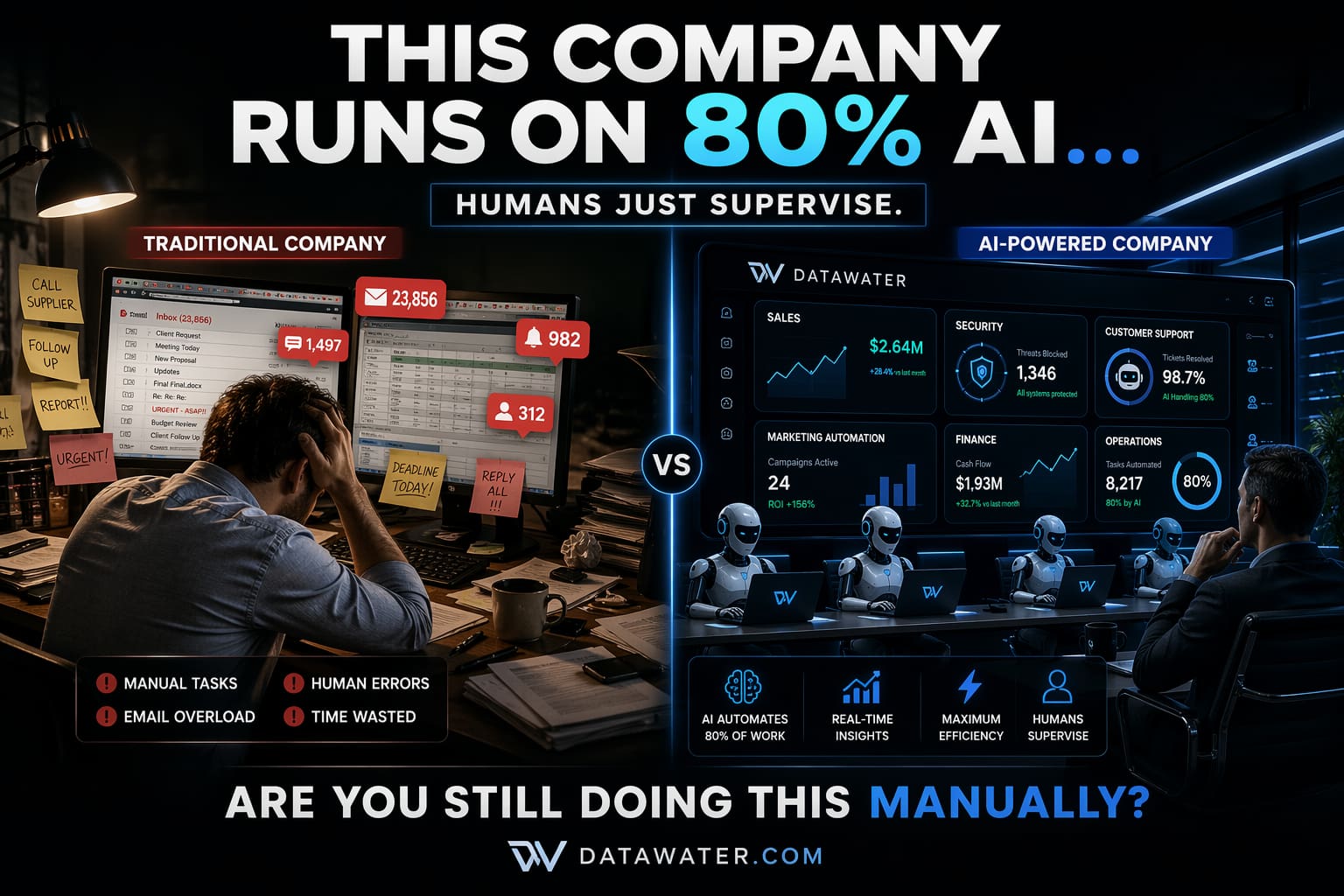
AI has officially moved from “experimental tech” to mission-critical infrastructure. The enterprises gaining the most revenue and efficiency today are the ones integrating AI into everyday workflows—not just launching pilots or dabbling with chatbots.
If you’re an enterprise leader, the real question isn’t if you should automate with AI… it’s which workflows deliver the biggest ROI right now. Below are the top 10 that consistently drive the highest impact in cost reduction, speed, accuracy, and customer satisfaction.
1. Customer Support & Service Desk Automation
Customer service is one of the most mature—and profitable—areas for AI automation.
What to workflows automate
- AI chatbots for Tier-1 issues: FAQs, password resets, troubleshooting
- Automated ticket triage and prioritization
- Draft responses for human agents
- Case summaries for escalations and handoffs
Business impact
- Faster first-response and resolution times
- 40–70% fewer repetitive tickets for human agents
- Lower operational cost per ticket
- Higher CSAT from faster, more consistent responses
2. IT Service Management & Incident Response workflows
IT teams are overwhelmed with repetitive tasks—AI fixes that instantly.
What to automate
- Virtual IT assistants for routine requests (account unlocks, VPN help, software installs)
- AI-powered incident classification and recommended actions
- Real-time anomaly detection across logs
- Auto-generated incident reports and documentation
Business impact
- Reduced MTTR
- Fewer outages and SLA violations
- Stronger security posture
- Happier, less overloaded IT teams
3. AI-Driven Sales Prospecting & Lead Qualification
Sales organizations are using AI to dramatically increase pipeline quality and outbound effectiveness.
What to automate
- AI scoring of leads and accounts
- Auto-generated outbound emails and sequences
- Instant research briefs on accounts and industries
- Real-time recommendations during calls and demos
Business impact
- Faster sales cycles
- Higher conversion rates
- Better alignment between sales and marketing
- More time selling—and less time researching
4. Marketing Content, Campaigns & Personalization
Marketing teams can now scale output without scaling headcount.
What to automate
- Blogs, landing pages, ad copy (human-refined)
- A/B testing ideas and performance predictions
- Automated customer segmentation
- AI-generated performance summaries
Business impact
- Faster campaign launches
- Higher ROI on paid media
- More personalized messaging across channels
- Consistent brand voice at scale
5. Finance: Accounts Payable, Expenses & Forecasting
Finance is packed with structured data—perfect for AI automation.
What to automate
- Invoice extraction and matching
- Automated expense policy enforcement
- AI-generated forecasts and scenario modeling
- Variance analyses and financial summaries
Business impact
- Faster month-end close
- Fewer compliance issues
- More accurate cash-flow visibility
- Finance teams free to focus on strategy
6. HR: Recruiting, Hiring & Onboarding
Talent acquisition is being transformed by AI.
What to automate
- Resume screening and shortlisting
- Personalized candidate outreach
- Interview scheduling
- Automated onboarding plans and documentation
Business impact
- Reduced time-to-hire
- Lower cost-per-hire
- Better candidate experience
- Faster new-hire productivity
7. Document Processing & Knowledge Management
Enterprises sit on millions of documents—AI finally makes them searchable and usable.
What to automate
- Smart document classification
- Extraction of key data from contracts and reports
- AI search over internal content
- Comparison summaries across versions or drafts
Business impact
- Faster due diligence and compliance checks
- Less time wasted searching old files
- Lower risk from overlooked obligations
- Dramatically improved knowledge sharing
8. Security, Risk & Compliance Monitoring
Security teams deal with massive data volumes—AI filters the noise.
What to automate
- Log analysis and anomaly detection
- Alert scoring to eliminate false positives
- Draft incident and compliance reports
- Continuous access and policy monitoring
Business impact
- Faster detection of real threats
- Lower analyst workload
- Stronger audit readiness
- Better governance without more headcount
9. Software Development & DevOps
Engineering teams are embracing AI as a built-in accelerator.
What to automate
- AI code suggestions, refactoring, documentation
- Test case generation and test summaries
- Release notes, change logs, deployment plans
- Post-incident reviews and summaries
Business impact
- Faster release cycles
- Higher code quality
- Better collaboration between Dev, Sec, and Ops
- More engineering focus on innovation—not repetitive tasks
10. Executive Reporting & Decision Support
AI upgrades leadership visibility and decision-making.
What to automate
- Automatically generated monthly business reviews
- First drafts of board decks and strategy documents
- Scenario modeling with narrative recommendations
- Natural-language Q&A over enterprise data
Business impact
- Leaders spend more time deciding, less time gathering data
- Better alignment across departments
- Faster pivots in response to market conditions
- Stronger data-driven culture
How Enterprises Should Start (Without Overwhelm)
Here’s the fastest, safest way to launch automation that actually sticks:
1. Choose 2–3 workflows from the list
Look for processes that are repetitive, high-volume, and prone to delays.
2. Map the current workflow
Identify where humans make decisions vs. where software moves data.
3. Add automation first, then layer in AI
RPA handles the mechanics.
AI handles decisions, classification, text generation, and routing.
4. Use human-in-the-loop checkpoints
This maintains accuracy and trust while adoption grows.
5. Measure the value early
Start tracking:
- Hours saved
- Cost avoided
- Faster cycle times
- Revenue lifted
- Increased satisfaction
Final Takeaway
The enterprises pulling ahead today are the ones treating AI as an automation engine—not just a chatbot.
If you automate these 10 workflows now, you’ll unlock faster execution, lower costs, sharper decision-making, and a more resilient organization built for the AI era.