
The AI-Powered Enterprise: What Businesses Running 80% on AI Automation Really Look Like
Autopilot does not mean absent leadership
When people hear that a business is running mostly on autopilot, they sometimes imagine a company with no human touch, no judgment, and no culture. In reality, the opposite is often true. The strongest AI-powered companies are intensely intentional. They decide which workflows should be automated, where human approval still matters, and how data, systems, and people should interact. The result is not chaos. It is clarity.
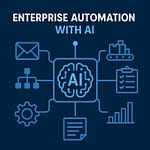
In a business like this, AI does not replace the company. It becomes the operating layer beneath the company. It drafts, sorts, routes, analyzes, summarizes, predicts, follows up, and flags issues before they become expensive. Human teams step in where empathy, negotiation, brand judgment, leadership, or exceptional problem-solving are required.

Always-on customer communication
One of the clearest signs of an AI-powered company is response speed. In a traditional business, customers wait for support, quotes, onboarding messages, reminders, and status updates. In an AI-powered business, most of that communication is instant, personalized, and consistent.
Operations that self-organize
Work no longer sits in inboxes waiting for someone to notice it. Tasks are categorized, prioritized, assigned, and escalated automatically based on business rules and live signals.
Leaders supported by live intelligence
Executives do not need to chase reports across departments. Key metrics, anomalies, forecasts, and strategic risks are surfaced automatically so leadership can spend less time collecting information and more time acting on it.
What 80% on autopilot actually includes
The phrase “80% on autopilot” does not mean that 80% of people disappear. It means that 80% of repeatable operational motion becomes system-managed. That includes the repetitive work that slows teams down, drains margins, and makes scaling harder than it should be. Think about everything a company does in a typical day: email triage, lead scoring, CRM updates, invoice reminders, meeting summaries, proposal drafts, support categorization, social scheduling, report generation, workflow handoffs, document review, inventory alerts, churn detection, and recurring internal approvals.
In a traditional company, dozens of employees touch these processes manually. In a truly AI-powered company, software agents and connected automations handle the first layer of execution. They gather information, apply rules, enrich records, suggest next steps, and trigger downstream actions. Humans review exceptions, approve high-stakes items, and shape the overall strategy.
This distinction matters. Businesses do not become more valuable by automating blindly. They become more valuable by automating intelligently. The goal is not to remove people from the picture. The goal is to remove friction from the picture.
What it looks like by department
Sales
Leads are captured, enriched, scored, segmented, and routed automatically. Outreach sequences adjust based on behavior. Meeting notes become CRM updates without manual entry. Proposals are drafted from templates and account context. Reps spend more time closing and less time on administrative drag.
Marketing
Campaign data is analyzed continuously. Content ideas, briefs, variations, subject lines, ad concepts, and audience segmentation recommendations are generated faster. Teams move from production bottlenecks to editorial control. AI handles the heavy lifting while marketers shape positioning and brand voice.
Customer Support
Common issues are resolved instantly. Tickets are classified and prioritized automatically. Sentiment is detected before a frustrated customer escalates publicly. Human agents focus on complex issues, retention moments, and high-value relationships instead of answering the same basic questions all day.
Finance and Admin
Invoice follow-ups, payment reminders, document extraction, recurring reconciliations, and approval routing become dramatically more efficient. Finance leaders gain cleaner visibility into cash flow, outstanding actions, and forecasting without waiting on spreadsheets to catch up.
Image Area 2
Core principle
The best AI-powered companies automate process, not responsibility. Accountability still belongs to leadership. AI simply reduces the cost, delay, and inconsistency of execution.
The strategic difference between AI-assisted and AI-powered
Many businesses today are AI-assisted. They use AI for writing, brainstorming, note-taking, or a few isolated automations. That can help productivity, but it does not fundamentally change the business model. An AI-powered company goes further. It treats AI as an operational system, not a side tool.
The difference is architectural. AI-assisted businesses still rely on people to move work from one stage to the next. AI-powered businesses connect the entire chain. A customer inquiry triggers a workflow. The workflow enriches the record, determines urgency, responds instantly, creates the task, notifies the team member, logs the interaction, schedules the follow-up, and updates the dashboard. That is what autopilot looks like in practice: coordinated motion without constant manual supervision.
This is why AI-powered companies can often scale faster with smaller teams. They are not just asking people to work harder. They are redesigning how work happens in the first place.
Faster execution
Tasks move in seconds instead of hours or days, reducing internal lag and external friction.
Lower operational drag
Teams are freed from repetitive processes that create burnout without adding meaningful value.
Better consistency
Automated systems apply rules and standards reliably, which improves customer experience and internal discipline.
Stronger focus
Human talent shifts toward strategy, innovation, partnerships, customer loyalty, and revenue growth.
Where businesses get it wrong
Not every automation strategy creates a smarter company. Some create fragile systems that fail quietly until customers or employees feel the damage. The biggest mistake is automating broken processes instead of improving them first. If the workflow is messy, unclear, or inconsistent, adding AI on top can simply make the mess faster.
Another mistake is removing human checkpoints from decisions that need context. Refund disputes, legal approvals, sensitive HR moments, key account negotiations, and brand-sensitive communications still need careful oversight. A mature AI-powered company knows exactly where autopilot ends and human judgment begins.
The companies that win with AI are not reckless. They are disciplined. They build governance, documentation, fallback plans, escalation paths, and clear accountability into the system from day one.
How businesses move toward 80% autopilot
Most companies do not leap directly into full autonomy. They move through stages. First, they identify the most repetitive tasks across customer operations, internal administration, sales, and reporting. Next, they standardize those workflows so AI has a clean structure to work with. Then they connect systems such as email, CRM, project management, billing, analytics, and knowledge bases.
After that, the company begins layering in intelligent actions: classification, drafting, summarization, recommendations, triggers, and predictive signals. Finally, it adds governance: who approves what, how exceptions are routed, what is logged, and how outputs are monitored over time.
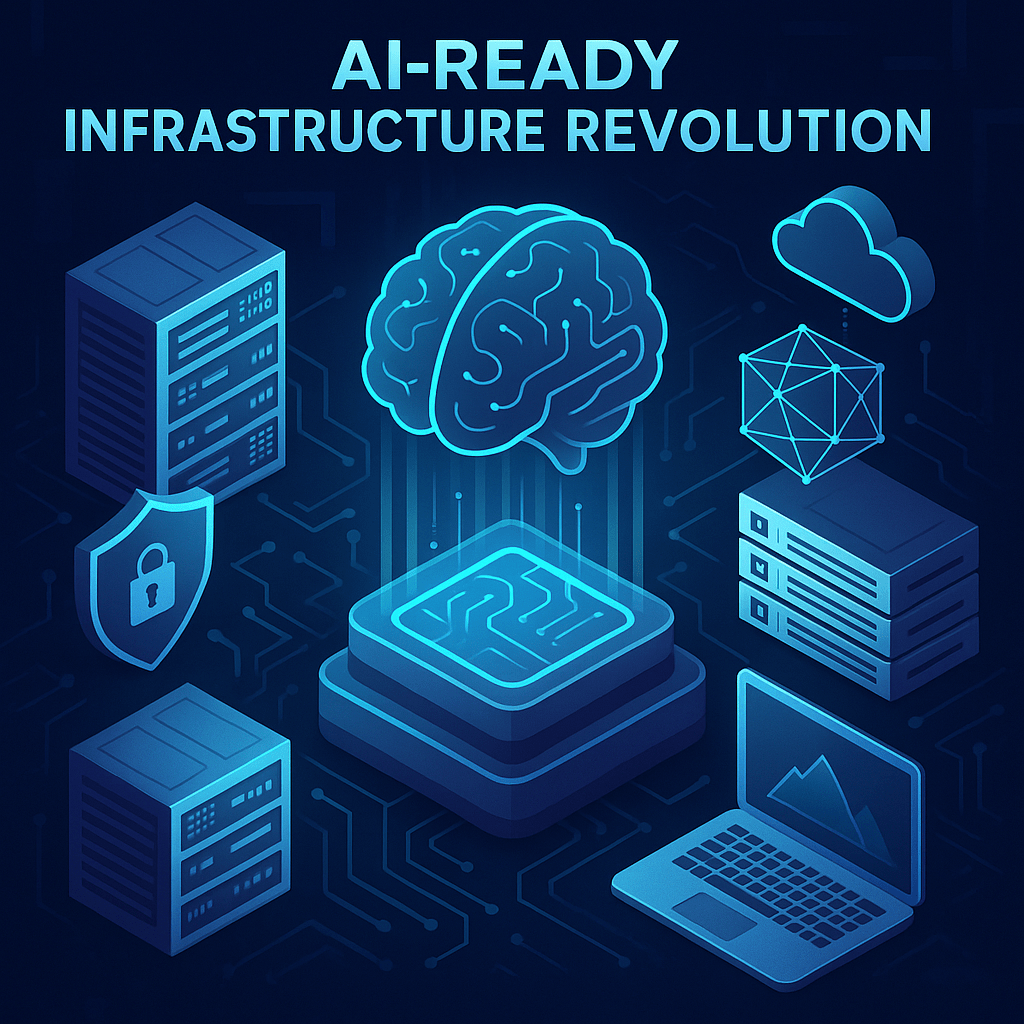
The breakthrough often happens when leaders stop thinking about AI as a productivity hack and start viewing it as operational infrastructure. That shift changes budgets, priorities, hiring, and long-term strategy.
The future company is not bigger. It is smarter.
The companies that run 80% on autopilot are not science fiction. They are the logical next step in business design. They combine software, data, automation, and AI to create companies that operate with more speed, more precision, and more strategic focus than legacy organizations can match.
Their teams are not less important. Their teams are more important because people are spending time where people create the most value. That means building trust, solving uncommon problems, shaping markets, developing partnerships, and leading change. AI handles the repeated motion. Humans shape the direction.
That is what an AI-powered company really looks like. It is not a business with no people. It is a business where people are finally freed from the work machines should have been doing all along.
Build an AI-powered business model before your competitors do
The next wave of competitive advantage will come from companies that automate intelligently, keep humans focused on high-value work, and design operations that can scale without constant friction.
Add Your CTA Link Here